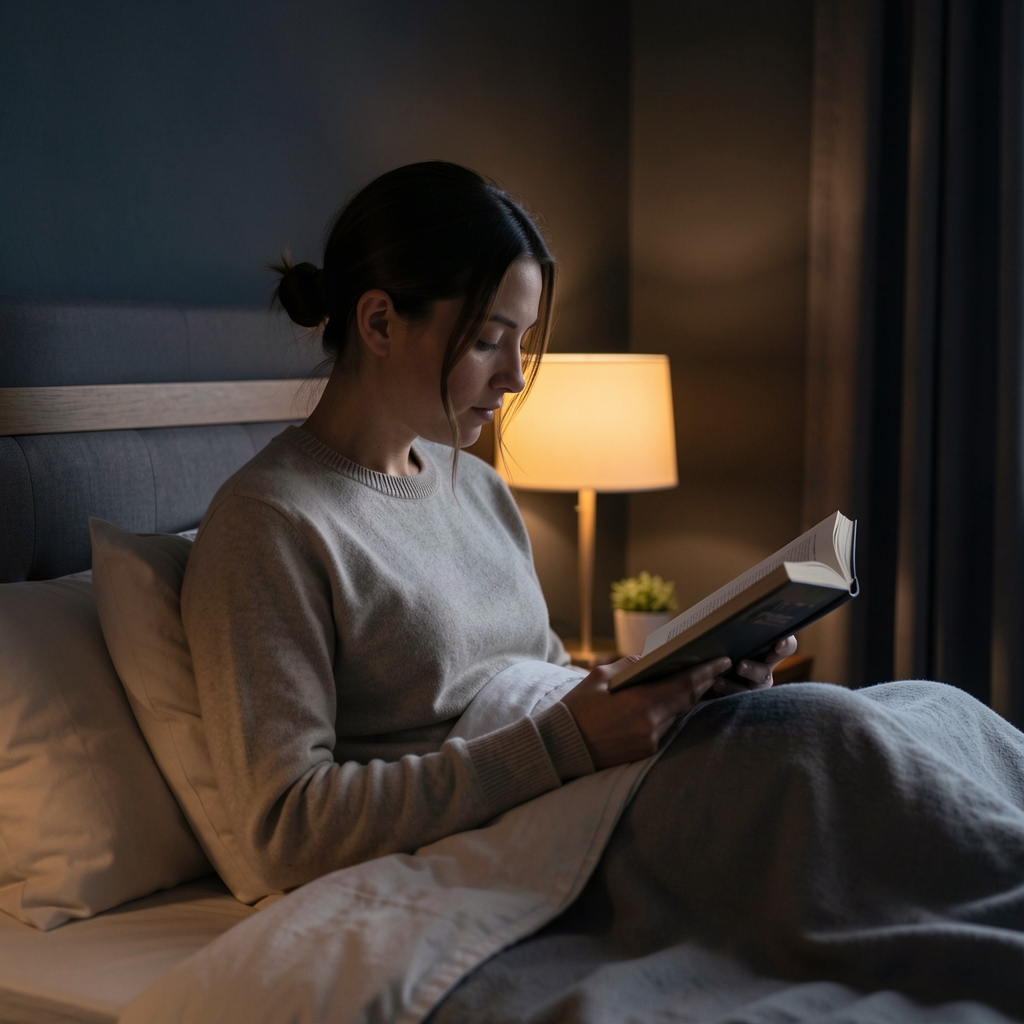
Sleep Hygiene

The quality of a morning — the subjective sense of readiness, alertness, and physical ease with which one enters the day — is not determined at the moment of waking. It is determined across the night, and in large part by the light environment that preceded it. What the published literature on circadian biology makes clear is that light is not merely a comfort variable. It is the primary input to the body's timekeeping mechanism.
The human eye contains, alongside the rod and cone photoreceptors responsible for conventional vision, a third class of light-sensitive cells: the intrinsically photosensitive retinal ganglion cells (ipRGCs). These cells are particularly sensitive to short-wavelength light in the 480nm range — the blue portion of the visible spectrum — and project directly to the suprachiasmatic nucleus (SCN), the brain structure that functions as the master circadian clock.
The SCN uses this light input to calibrate the body's internal circadian phase — its estimate of where it sits in the 24-hour cycle. When short-wavelength light reaches the ipRGCs in the evening, the SCN interprets this as a signal that it is still daytime, and delays the onset of the melatonin production sequence accordingly. When the same light arrives in the morning, it reinforces the circadian signal that the sleep period is ending and the activity period has begun.
This mechanism is not a minor influence. The SCN's light calibration is the primary synchroniser of the internal clock to the external 24-hour cycle. Without regular, appropriately timed light input, the internal clock drifts — typically running slightly longer than 24 hours in the absence of external cues, a phenomenon documented in isolation studies.
Published research on circadian rhythm regulation consistently identifies morning light exposure — specifically, bright light encountered within the first 30 to 60 minutes after waking — as the most reliable external anchor for circadian phase. This finding holds across multiple populations and study designs, from laboratory-controlled light exposure to naturalistic observation studies.
The practical significance is direct: individuals who receive consistent morning light exposure at a stable time each day show more consistent circadian timing, earlier and more reliable sleep onset in the evenings, and higher-quality ratings of morning alertness than those who vary their light exposure timing or receive minimal morning light.
Natural outdoor light, even on overcast days, provides illuminance levels of several thousand lux — substantially higher than typical indoor artificial lighting, which ranges from 100 to 500 lux in most domestic settings. This difference is relevant: the circadian system's sensitivity to light as a phase-setting signal is dose-dependent, with higher illuminance producing stronger and faster phase adjustment.
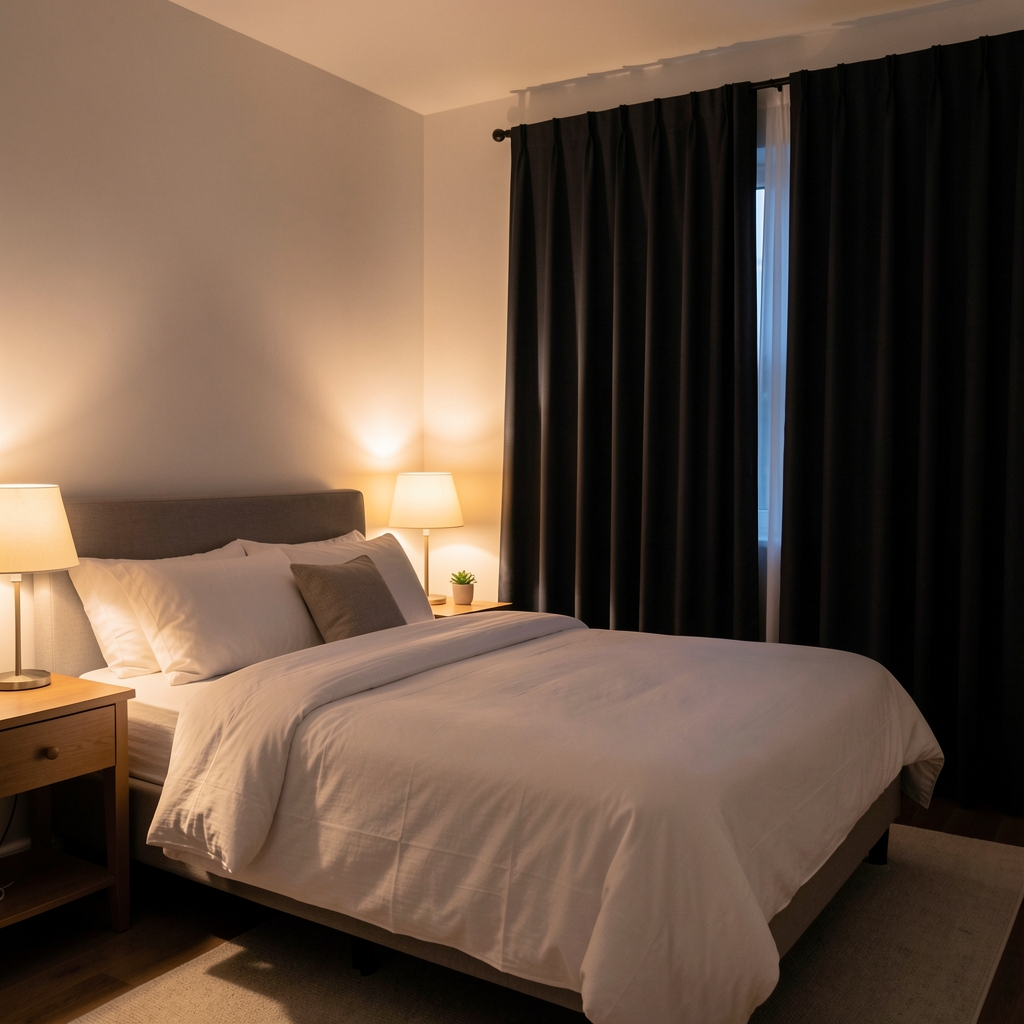
The bedroom environment at the moment of waking plays a documented role in the quality of the morning transition. Two variables recur most consistently in the published literature: the blackout versus light-admitting quality of window treatments, and the acoustic environment.
Blackout curtains and blinds, widely used as a sleep-quality intervention, produce a documented trade-off. While they effectively reduce light intrusion during sleep — particularly relevant in the early morning hours when outdoor light levels rise before the target wake time — they also prevent the gradual light increase that serves as a natural circadian wake signal. Individuals using complete blackout who then rely on an abrupt alarm signal at a fixed time report higher frequencies of sleep inertia (the subjective grogginess associated with abrupt wakening from deeper sleep stages) compared with those who wake during a natural light gradient.
The observation suggests a layered approach: blackout window treatments paired with a simulated dawn device — a lamp that increases illuminance gradually over 20 to 30 minutes before the target wake time — addresses both the sleep-intrusion problem and the abrupt-wake problem simultaneously. This combination is among the more consistently evidence-supported bedroom environment modifications in the sleep-hygiene literature.
The "morning freshness index" — a term used informally in several observational sleep-quality studies to describe the composite subjective experience of waking (alertness, absence of grogginess, physical readiness) — is not directly measurable. It functions as a summary variable for a collection of sleep-quality indicators: the depth and completeness of sleep cycles, the timing of the final wake relative to circadian phase, and the rate of physiological arousal following waking.
What published research does consistently document is that daytime energy levels — the composite experience of alertness, concentration maintenance, and absence of fatigue across the working day — correlate more strongly with sleep quality than with sleep quantity. An individual who achieves seven hours of high-quality sleep (adequate deep and REM stages, stable circadian timing, minimal nocturnal arousal) typically reports superior daytime functioning to one who achieves eight hours of fragmented, poorly-timed sleep.
The practical implication of this finding is that daytime energy functions as a usable diagnostic indicator for sleep quality. Individuals who systematically track their subjective morning freshness ratings alongside environmental variables — bedtime, wake time, light exposure, bedroom temperature — are positioned to identify which combinations of variables correlate most reliably with their own high-quality sleep outcomes.
In higher-latitude locations — which includes the United Kingdom — the natural morning light schedule varies substantially across the calendar year. In summer months, ambient light levels rise well before typical waking times; in winter, the reverse applies, with most working-day mornings beginning in near-darkness.
This seasonal variation presents a specific challenge for circadian anchoring by natural light. Winter mornings in London, Edinburgh, or Manchester provide minimal natural light at or before the typical waking hour. Published research on seasonal variation in sleep quality finds predictable trends: average sleep onset times shift later in winter months, wake times show greater variability, and self-reported morning freshness ratings are generally lower.
The documented response to this problem — beyond the simulated dawn lamp approach described above — involves the deliberate use of bright artificial light (light boxes providing 2500 to 10,000 lux) during the first 30 to 60 minutes of the morning. This practice, most extensively studied in the context of seasonal affective patterns, produces circadian phase-advancing effects equivalent to those of natural morning light exposure, and is among the more robustly supported environmental interventions in the published sleep literature.
Articles published on Belsoran Notebook are editorial in nature and reflect the writers' observations on everyday wellness practices. The content is not intended as professional advice, nor as guidance for the management of any specific condition. Readers with specific concerns about their daily routines are encouraged to speak with a qualified wellness professional.

Tobias Ashcroft is a contributing writer at Belsoran Notebook, focusing on circadian biology, light-sleep interaction, and the environmental determinants of rest quality. He holds a background in science communication and long-form health journalism.
More from Belsoran Notebook →